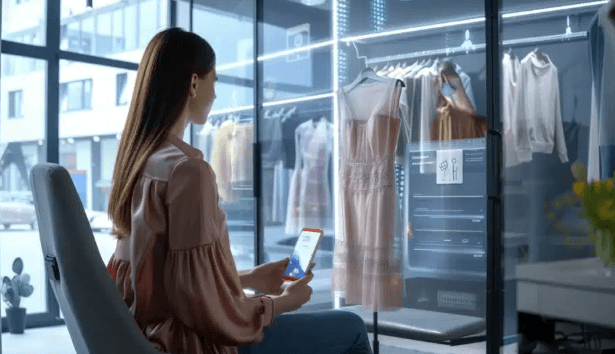
The most significant barrier to the growth of fashion e-commerce has always been the uncertainty of fit. No matter how high the resolution of a photo is, a customer cannot truly know how a garment will look on their specific body type until they put it on. This gap has historically led to lower conversion rates and an overwhelming cycle of returns. However, with the emergence of advanced 3D AI design, the industry is finally moving toward a solution: Virtual Try-On (VTO) technology.
By combining artificial intelligence with high-fidelity 3D modeling, retailers are now able to offer an immersive fitting room experience directly on a customer’s smartphone or laptop.
The Evolution of the Digital Fitting Room
In its early stages, virtual try-on was often gimmicky, featuring static 2D overlays that lacked realism. Today, the technology has matured into a sophisticated simulation engine. Modern AI-driven design tools can now create a digital twin of a garment that possesses the exact physical properties of its real-world counterpart.


When a customer uses a VTO tool, the AI doesn’t just “place” a shirt over a photo. It calculates the weight of the fabric, the elasticity of the waistband, and the way the material drapes over the curves of a 3D avatar. This level of precision is what makes the experience feel real and trustworthy.
How 3D AI Design Powers Accuracy
The secret behind a successful virtual try-on lies in the data. AI systems analyze thousands of physical fabric samples to understand how different textiles behave.
- Physical Realism: Whether it is a stiff denim or a flowing silk, the AI ensures that the digital garment reacts to a body’s movement just like physical cloth would.
- Size Recommendation: Many VTO platforms now allow users to input their measurements or take a quick scan. The AI then suggests the perfect size, showing “heat maps” where the garment might be too tight or too loose.
- Lighting and Texture: Advanced rendering ensures that colors and textures are displayed accurately under different virtual lighting conditions, reducing the “it looked different online” complaint.
Benefits for the Modern Retailer
Integrating virtual try-on technology into an e-commerce storefront is no longer just about the “cool factor”—it is a strategic business move with measurable returns.
1. Significant Reduction in Returns
In the fashion industry, returns are a massive logistical and financial burden. A large percentage of these returns are due to fit issues. By allowing customers to “try before they buy” digitally, brands are seeing a drastic drop in return rates, which directly boosts the bottom line and improves sustainability.
2. Higher Conversion Rates
Uncertainty is the enemy of the “Buy” button. When a customer can see a 3D AI design on an avatar that represents their body, their confidence increases. This transparency leads to faster decision-making and a higher likelihood of completing the checkout process.
3. Enhanced Customer Engagement
Interactive tools keep shoppers on a website for longer. The fun, gamified nature of trying on different outfits and customizing looks creates a memorable brand experience, fostering loyalty in a crowded market.
Bridging the Gap Between Customization and Production
AI-driven VTO technology is also enabling a “Made-to-Order” revolution. Since the design is fully digital and integrated with 3D AI tools, brands can allow customers to customize their garments—changing lengths, sleeves, or patterns—and see the result instantly. Once the customer is satisfied, the AI can generate the precise patterns needed for production, ensuring the final physical product matches the virtual choice perfectly.
The Future: AI as a Personal Stylist
As we move forward, virtual try-on technology will become even more personalized. We are seeing the rise of AI stylists that can recommend outfits based on a customer’s body shape, skin tone, and previous shopping history. In this scenario, the virtual fitting room becomes a personal concierge, helping users discover new styles that they are guaranteed to love and that are guaranteed to fit.
See also: How Often Should You Clean Your Roof in Florida for Lasting Protection and Curb Appeal
Conclusion
Virtual try-on technology is the final piece of the puzzle for fashion e-commerce. By leveraging the power of 3D AI design, brands are finally able to provide the one thing online shopping was missing: the certainty of the fitting room.
As technology like Style3D AI continues to refine the accuracy of digital textiles and human avatars, the line between physical and digital retail will continue to blur. For the consumer, it means a more convenient and confident shopping journey. For the brand, it means a more efficient, sustainable, and profitable future. The era of “guessing your size” is coming to an end, replaced by a high-tech, interactive, and perfectly fitted digital experience.