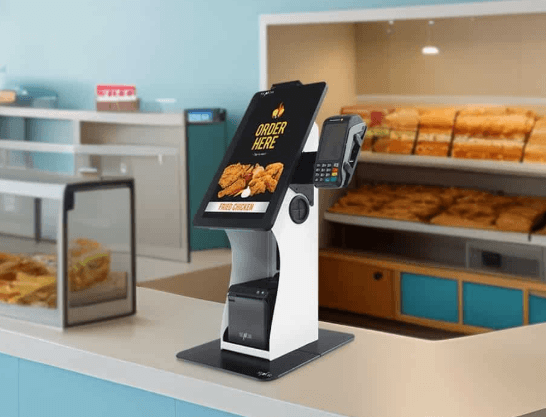
The food service industry is undergoing a profound digital transformation, and the kiosk ordering system has emerged as one of the most impactful technologies driving this change. By enabling customers to browse menus, place orders, and complete payments without staff assistance, self-service kiosks are helping restaurants and quick-service chains improve operational efficiency, reduce wait times, and significantly boost average transaction values.
What Is a Kiosk Ordering System?
A kiosk ordering system is a self-service terminal, typically a touchscreen device placed at or near the entrance of a restaurant, that allows customers to independently place food and beverage orders. These systems connect directly to the kitchen display or printing infrastructure, enabling orders to flow seamlessly from customer selection to food preparation without manual intervention.
Key Benefits of Kiosk Ordering Systems


Reduced Wait Times and Faster Throughput
By processing multiple customers simultaneously, kiosk systems dramatically reduce queue lengths during peak hours. Each customer controls their kiosk ordering system own pace of ordering without feeling rushed, and orders reach the kitchen instantly, cutting the overall time from arrival to food delivery.
Higher Average Order Values
Studies across the quick-service restaurant sector have consistently found that customers tend to spend more when ordering via kiosk compared to counter ordering. The visual presentation of menu items, combined with intelligent upselling prompts for add-ons and combos, naturally encourages customers to explore more options and upgrade their selections.
Labour Cost Reduction
While kiosks do not replace all front-of-house staff, they allow businesses to redeploy counter staff to higher-value roles such as food preparation, quality control, and customer service, resulting in more efficient overall labour utilisation.
Core Features of a Quality Kiosk Ordering System
Intuitive Touchscreen Interface
The best kiosk systems feature a clean, user-friendly interface with high-quality food photography and straightforward navigation. A well-designed interface minimizes ordering errors and ensures that customers of all ages and technical backgrounds can complete their orders with confidence.
Real-Time Menu Management
Centralised menu management allows restaurant operators to update prices, add promotions, remove sold-out items, and introduce seasonal specials across all kiosk terminals simultaneously, ensuring menus are always accurate and current.
Multiple Payment Options
Modern kiosk systems accept a wide range of payment methods including credit and debit cards, contactless payments, digital wallets, and QR code payments, catering to the diverse preferences of today’s customers.
Considerations When Choosing a Kiosk System
- Hardware durability and resistance to heavy daily use
- Integration capabilities with existing POS and kitchen management systems
- Accessibility features for customers with disabilities
- Reliability of the vendor’s after-sales support and maintenance services
- Scalability to support multi-location deployments
Frequently Asked Questions
Q: How long does it take to implement a kiosk ordering system?
A: Implementation timelines vary based on the complexity of the installation and the number of locations involved. A single-site deployment can typically be completed within a few days, including staff training and system testing.
Q: Can a kiosk system integrate with my existing POS?
A: Most modern kiosk ordering systems are designed with integration in mind and can connect to popular POS platforms. It is important to verify compatibility with your specific system before committing to a purchase.
Q: Is a kiosk ordering system suitable for fine dining restaurants?
A: Kiosk systems are most commonly associated with quick-service and fast-casual dining. Fine dining establishments typically prioritise personalised table service, though some may use kiosks in specific areas such as bar ordering or event check-in.
See also: Pblinuxtech Gaming Hacks From Plugboxlinux
Conclusion
A well-implemented kiosk ordering system can be a transformative investment for food service businesses of all sizes. By accelerating order processing, increasing revenue per customer, and freeing staff to focus on service quality, these systems deliver measurable returns that justify the initial investment. As customer expectations for speed and convenience continue to rise, kiosk technology is rapidly becoming a standard feature of the modern dining experience.