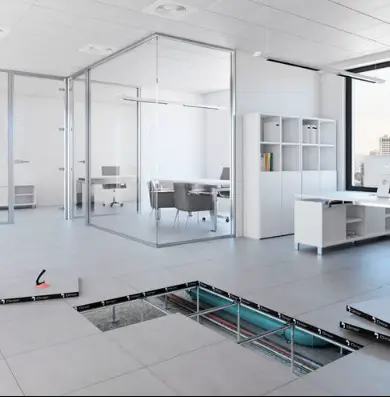
In contemporary commercial, industrial, and technology-driven facilities, flooring solutions must be both durable and adaptable. Calcium sulphate raised floor systems have become a critical choice for architects, engineers, and facility managers who require long-lasting, versatile, and efficient flooring. These systems offer structural strength, flexibility for utilities, and long-term operational benefits that make them ideal for modern infrastructure projects.
Traditional flooring methods often lack the modularity and access needed for today’s buildings. With increased integration of electrical, data, and HVAC systems, underfloor space has become a necessity for maintenance, upgrades, and flexible design. Calcium sulphate raised floors address these challenges, providing a robust solution that supports both operational efficiency and future adaptability.
Understanding Calcium Sulphate Raised Floors
A calcium sulphate raised floor system elevates panels above the building’s structural floor, creating accessible space underneath for utilities and infrastructure. This underfloor cavity allows for easy installation and maintenance of cables, pipes, and air distribution systems.


Key characteristics of calcium sulphate raised floors include:
- High Load-Bearing Capacity: Supports heavy office furniture, industrial equipment, and foot traffic.
- Moisture and Fire Resistance: Ensures stability and safety under various conditions.
- Flat, Stable Surface: Supports tile or carpet finishes and maintains uniformity.
- Modular Panels: Easy to remove and reconfigure for maintenance or upgrades.
Modern offices, data centers, and industrial facilities depend on these features to maintain operational efficiency and infrastructure accessibility.
Advantages of Calcium Sulphate Raised Floors
Superior Durability
Calcium sulphate panels are robust and resistant to deformation, making them suitable for high-traffic areas or environments with heavy equipment. This durability ensures long-term performance and reduces maintenance costs over the lifespan of the building.
Efficient Infrastructure Management
The underfloor space allows organized routing of electrical, network, and HVAC systems. This simplifies maintenance, reduces downtime, and facilitates upgrades without disrupting building operations.
Safety and Fire Protection
Calcium sulphate’s inherent fire resistance improves overall safety in office, industrial, and data center environments. Its moisture resistance also helps protect the structural integrity of the flooring over time.
Acoustic and Thermal Performance
Raised floors contribute to sound insulation and efficient air circulation, enhancing thermal comfort and energy efficiency. This is particularly valuable in large office buildings and technical environments such as server rooms.
Facilities looking for reliable and long-term flooring solutions may explore calcium sulphate raised floor systems to improve both infrastructure accessibility and operational efficiency.
Applications Across Industries
Calcium sulphate raised floors are widely used in:
- Data Centers: For cable management, cooling, and supporting heavy servers.
- Corporate Offices: Facilitates flexible workspace arrangements and efficient utility access.
- Laboratories and Clean Rooms: Resistant to chemicals and provides stability for sensitive equipment.
- Industrial Facilities: Supports heavy machinery while maintaining accessible underfloor space.
These applications highlight the versatility and necessity of raised flooring in modern facility planning.
See also: How Contact Center Metrics Can Drive Continuous Improvement in Healthcare Services
Considerations When Installing Calcium Sulphate Raised Floors
Load Requirements
Determine maximum load requirements from equipment, furniture, and personnel to ensure proper panel selection.
Environmental Conditions
Consider humidity, temperature variations, and fire safety standards when choosing materials.
Accessibility
Ensure panels can be easily removed to access underfloor utilities, reducing operational disruptions during maintenance or upgrades.
Longevity and Maintenance
Opt for durable materials that resist wear, moisture, and chemical exposure to minimize maintenance needs.
Industry Trends Driving Raised Floor Adoption
Integration with Smart Building Systems
Raised floors facilitate the installation of IoT devices, sensors, and other intelligent building infrastructure.
Sustainability
Durable materials reduce replacement frequency, supporting eco-friendly construction practices.
Modular and Flexible Design
Modular panels allow for quick reconfiguration of layouts, renovations, and infrastructure upgrades.
Frequently Asked Questions
1. What is a calcium sulphate raised floor?
It is a raised floor system with panels made from calcium sulphate, offering high load-bearing capacity, moisture and fire resistance, and easy access to underfloor utilities.
2. Where are these floors commonly used?
They are commonly found in data centers, corporate offices, laboratories, and industrial facilities requiring flexible infrastructure and durability.
3. Why choose calcium sulphate over other materials?
Calcium sulphate offers superior durability, fire and moisture resistance, and long-term structural stability compared to traditional cementitious or wood-core panels.
Conclusion
Calcium sulphate raised floor systems are an essential component of modern building design. They provide durability, flexibility, and operational efficiency, making them ideal for data centers, offices, and industrial facilities. Investing in high-quality calcium sulphate raised floors ensures long-term performance, accessible infrastructure, and the ability to adapt to future operational needs, making it a vital solution for contemporary construction projects.